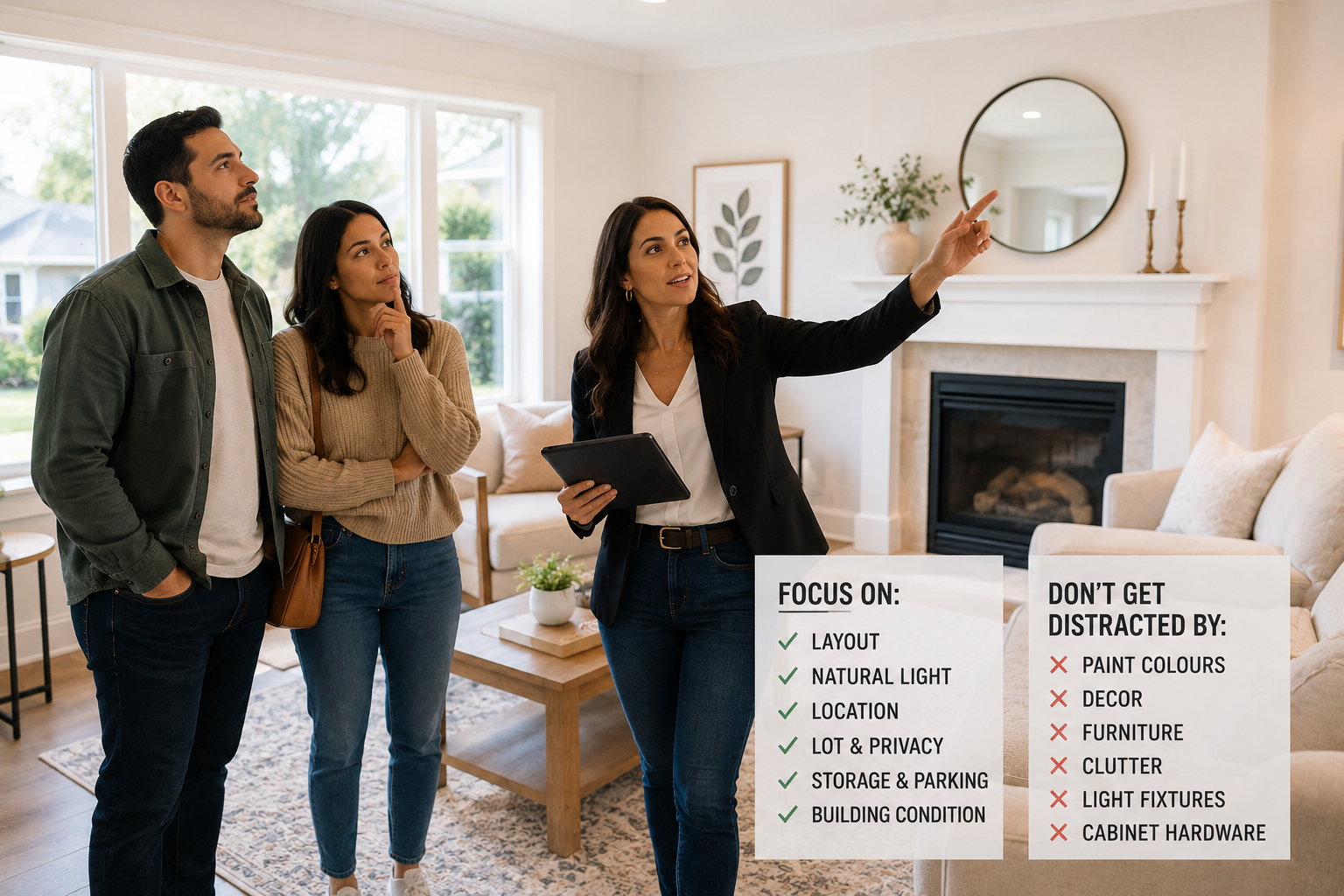
When you walk through a home, it’s easy to get distracted.
Maybe the paint colours are not your style. Maybe the furniture feels dated. Maybe the house is cluttered. Maybe the lighting is too dark, or the decor makes it hard to picture yourself living there.
Those things can affect how a home feels. But they don’t always affect whether the home is a good fit. Some of the things buyers notice first are also some of the easiest things to change.
Paint can be changed. Light fixtures can be replaced. Furniture goes with the seller. Cabinet hardware can be updated. Landscaping can be improved. Carpet can often be replaced. Even a room that feels awkward because of the current furniture layout may function much better with your own setup.
The bigger things matter more.
Location. Layout. Lot. Natural light. Parking. Storage. Suite potential. Strata condition. Building systems. Roof, windows, plumbing, electrical, drainage, exterior maintenance, and overall structure. Those are the things that can have a much bigger impact on your day-to-day life, your costs, and your future resale. This is why it’s important to look past surface-level distractions.
A home that doesn’t show perfectly may still be a very good opportunity. In fact, some buyers overlook homes simply because they can’t see past cosmetic issues. That can create opportunity for buyers who are willing to look more carefully.
On the other hand, a home that shows beautifully is not automatically the best choice.
Great staging, fresh paint, and nice furniture can make a home feel impressive. But buyers still need to look at the details that matter. Is the layout functional? Are there expensive repairs coming? Is the price supported by comparable sales? Does the home actually fit your needs?
When I walk through homes with buyers, I try to help them separate emotion from substance. I want them to notice how the home feels, but I also want them to understand what they are really buying.
Some flaws are easy to fix.
Some flaws are expensive.
Some flaws are just distractions.
Knowing the difference can save you from passing on a good home — or falling for the wrong one.
The goal is not to ignore everything. The goal is to know what deserves your attention.

 The data relating to real estate on this website comes in part from the MLS® Reciprocity program of either the Greater Vancouver REALTORS® (GVR), the Fraser Valley Real Estate Board (FVREB) or the Chilliwack and District Real Estate Board (CADREB). Real estate listings held by participating real estate firms are marked with the MLS® logo and detailed information about the listing includes the name of the listing agent. This representation is based in whole or part on data generated by either the GVR, the FVREB or the CADREB which assumes no responsibility for its accuracy. The materials contained on this page may not be reproduced without the express written consent of either the GVR, the FVREB or the CADREB.